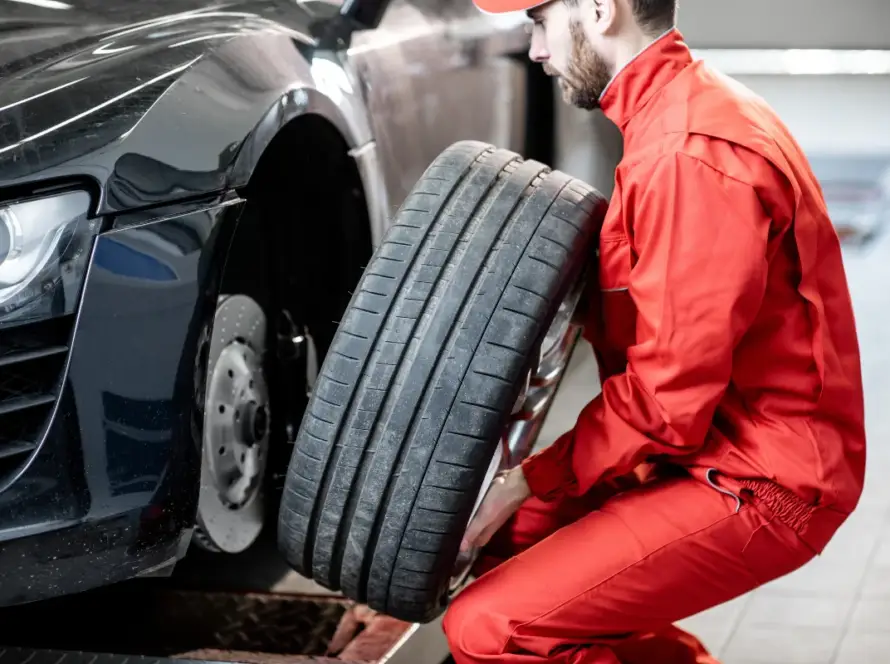
If your tyre keeps losing pressure even after you top it up, the most common culprits are a leaking valve stem, a puncture from a nail or screw, a corroded wheel rim, or a bad bead seal where the tyre meets the wheel. A faulty TPMS sensor seal and normal temperature drops can also cause slow leaks.
You’ve probably filled the tyre once already this week. And now the warning light is back on. That’s frustrating, and it usually means something specific is wrong, not just “old age.”
Below are the real reasons tyres lose air, based on how mechanics actually diagnose slow leaks, plus what you can check before booking a repair.
1. A Damaged or Corroded Valve Stem
The valve stem is the small rubber piece where you attach the air pump. Cracked rubber, a loose valve core, or corrosion inside the stem lets air escape slowly, often just a few PSI per week.
You can test this yourself. Spray soapy water on the valve stem. If bubbles form, air is leaking from that spot. This is one of the cheapest fixes, usually under $15 at most shops.
2. A Slow Puncture From Road Debris
Nails, screws, and glass don’t always cause instant flats. A small object can stay lodged in the tread and create a slow leak that takes days or weeks to fully drain the tyre.
Check the tread carefully. If you find a puncture in the tread area (not the sidewall), a plug or patch usually solves it. Sidewall punctures are different. They usually mean you need a full tyre replacement.
3. Corrosion or Damage on the Wheel Rim
Even a perfect tyre won’t hold air if the rim underneath it is compromised. Rust, bent edges, or a buildup of brake dust on the rim can break the seal between the tyre and the wheel.
This is common on older vehicles or in regions with road salt. A shop can clean and reseal the rim, which often fixes leaks that seem to have no obvious source.
4. A Bad Bead Seal
The “bead” is where the tyre’s edge locks onto the wheel rim. If the bead isn’t seated properly, air can leak out slowly around the entire circumference of the wheel, not from one single point.
This often happens after a tyre change if the technician didn’t get a full, even seal. Soapy water sprayed around the whole rim edge will show bubbles if this is the issue.
5. Temperature Changes
Cold weather causes tyre pressure to drop on its own, no leak involved. For every 10°F drop in temperature, tyre pressure typically drops by about 1 to 2 PSI.
If your tyre only loses pressure during cold snaps and holds steady otherwise, this is likely the reason. Check your pressure again once temperatures rise. If it stabilizes, there’s no leak to chase.
6. A Faulty TPMS Sensor Seal
Most vehicles built after 2008 have a Tyre Pressure Monitoring System (TPMS) sensor mounted inside the wheel. The rubber seal around this sensor degrades over time, usually around the 5 to 7 year mark, and can start leaking air just like a valve stem would.
This leak is easy to miss because it’s inside the wheel, not on the tread. If your tyre keeps losing pressure and you can’t find an external puncture, ask your mechanic to check the TPMS seal specifically.
7. A Cracked or Aging Tyre
Tyres degrade even if they still have tread depth. Sidewall cracking, known as dry rot, lets air seep out gradually through tiny fissures you may not be able to see without a close inspection.
This is more common on tyres over 6 years old, or on vehicles that sit unused for long stretches. If your tyre is showing surface cracks, pressure loss is usually a symptom of the tyre needing replacement, not a repairable leak.
How to Actually Find the Leak
Before assuming the worst, try this at home:
- Inflate the tyre to the recommended PSI (check your driver’s side door jamb for the number).
- Spray a mix of soapy water over the valve stem, tread, sidewall, and rim edge.
- Watch for bubbles. Bubbles mean you’ve found the leak point.
- Recheck pressure after 24 hours if you don’t see bubbles, since some leaks are too slow to catch immediately.
If you can’t isolate the leak yourself, a shop can submerge the wheel in water or use a pressure decay test to pinpoint it in a few minutes.
When to Stop Driving on It
A tyre that loses more than 3 PSI per week needs attention soon. If the pressure drops fast enough to trigger your TPMS light within a day or two, don’t keep driving on it. Low pressure increases blowout risk and wears down the tread unevenly, which shortens the life of the tyre.
The Bottom Line
Tyres don’t lose pressure for no reason. Whether it’s a valve stem, a puncture, a rim issue, or a bead seal, there’s almost always a specific, fixable cause. Track how fast the pressure drops, check for the common culprits above, and get it inspected if you can’t find the source yourself. Catching it early is cheaper and safer than waiting for a flat.