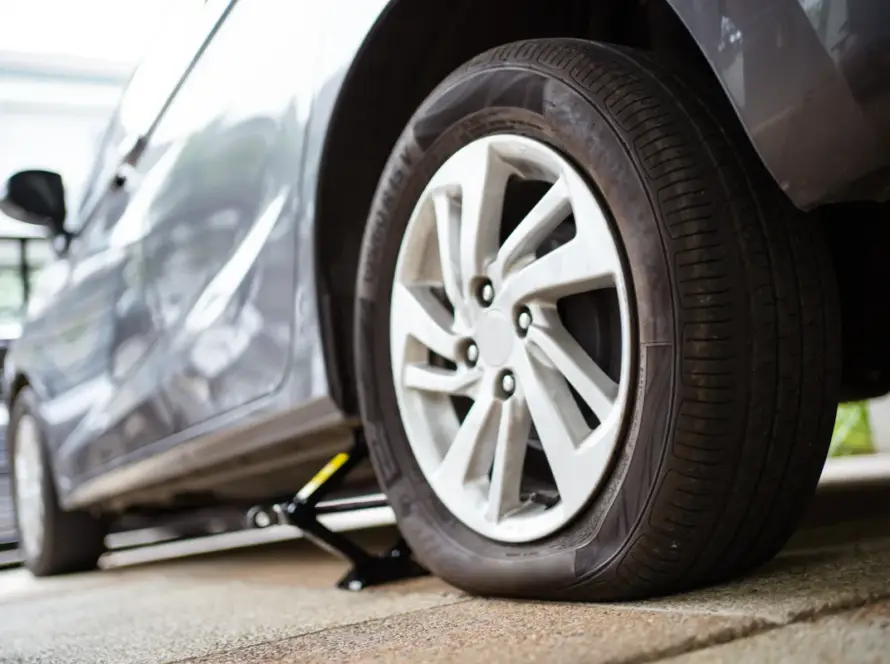
Mobile tyre fitting in Central London works differently from anywhere else in the country, because the van has to get to you, stop legally and work safely inside the Congestion Charge zone. The Congestion Charge is £18 a day from 2 January 2026, ULEZ adds £12.50 for non-compliant vehicles, and red routes carry no stopping at any time. Those three facts shape the price, the arrival window and where the fitter can actually park.
What decides the job in Central London:
- Congestion Charge zone
- Red routes and loading bays
- Controlled parking zones
- Underground car park height limits
- Peak-hour traffic windows
What Central London Costs on Top
The charges apply to the van reaching you, which is why Central London pricing differs from the rest of the capital.
- Congestion Charge: £18 per day, rising to £21 if paid by midnight on the third day after travel. It applies 7am to 6pm Monday to Friday and 12pm to 6pm on weekends and bank holidays, with no charge between Christmas Day and New Year’s Day.
- ULEZ: £12.50 per day for vehicles that do not meet the emissions standard.
- Parking or suspension costs, where the only legal stopping point is a metered bay.
Ask whether the quote includes these before booking. A quote that excludes the Congestion Charge is not comparable to one that includes it, and the general pricing structure is set out in how much does mobile tyre fitting cost in the UK.
Booking outside charging hours removes the Congestion Charge entirely. A 6.30pm fit on a weekday costs less than the same job at 2pm for that reason alone.
Where the Van Can Legally Stop
This is the question that decides whether the job happens at all, and it is worth answering before you book.
Red routes. Marked with single or double red lines, these carry no stopping at any time on double red, and restricted stopping on single red. Enforcement is by camera, so there is no warning. A tyre change cannot happen on a double red line.
Loading bays. Often usable for the duration of a fit, but check the signed hours and maximum stay at the specific bay.
Residents’ parking and CPZs. The van needs a space, and suspended or permit-only bays are not available at short notice.
Metered bays. Usually the most reliable option in the West End and the City, paid by the hour.
Private forecourts and car parks. The safest option where available, subject to height.
Tell the fitter the exact street and what the nearest legal stopping point is when you book. In Central London that information changes the arrival time more than the distance does.
Underground Car Parks & Height Limits
A large proportion of Central London parking is underground, and most service vans do not fit.
Typical underground car park height restrictions sit below the height of a fitting van with roof-mounted equipment. Where your car is in a basement car park, two options exist:
- Drive the car up to street level before the fitter arrives, if it is safe to move.
- Book a service with a low-height van, confirmed at booking rather than assumed.
Where the tyre is completely flat and the car cannot be moved, say so at the booking stage. A van that arrives and cannot reach the vehicle is a wasted call-out charge.
Timing the Booking
Traffic decides the arrival window more than distance does inside the zone.
- Avoid 8am to 10am and 4pm to 7pm where the job is not urgent, since these are the slowest windows for a van crossing the zone.
- Mid-morning and early afternoon give the tightest arrival windows.
- After 6pm on weekdays avoids both the Congestion Charge and the worst traffic.
- Weekend mornings before noon avoid the weekend Congestion Charge hours, which start at 12pm.
Give a realistic window rather than demanding the earliest slot. A fitter who commits to 30 minutes across the zone at 5pm is quoting optimistically.
Emergency Fitting in the Zone
An unplanned flat in Central London is a different problem from one on a driveway.
Move the car off a red route if it is drivable at low speed for a short distance, into a side street or a metered bay. If it is not drivable, put the hazards on and stay out of the carriageway. The full roadside sequence is covered in flat tyre in London what to do, and the question of who to contact first is covered in tyre breakdown in the UK.
Do not drive on a completely flat tyre to find a better spot. Beyond a few metres at walking pace it destroys the sidewall and often the wheel, which turns a repair into a replacement, as explained in how long can you drive on a flat tyre.
London Roads Damage Tyres Faster
Three features of Central London driving wear tyres in ways that motorway driving does not.
Kerbing. Tight parallel parking against high kerbs damages sidewalls, and sidewall damage cannot be repaired. The assessment is set out in sidewall damage on a tyre.
Potholes. Repeated stop-start traffic over damaged surfaces produces bulges, buckled rims and alignment faults. The symptoms to check after an impact are listed in driving over potholes.
Stop-start wear. Constant braking and acceleration at low speed wears the tread faster than steady-speed driving over the same mileage.
Many Central London cars run run-flat tyres, which change what is possible at the roadside. Run-flats are generally not repairable once driven on deflated, so a puncture usually means a replacement, as covered in run flat tyre vs normal tyre.
What to Have Ready
Having these to hand shortens the visit and avoids a second trip.
- Tyre size from the sidewall, in the format 225/45 R17 91W.
- Locking wheel nut key, which is the single most common cause of an aborted fit.
- Exact location, including the nearest legal stopping point and any access code.
- Whether the car is drivable, and whether it is above or below ground.
- Whether the tyre is a run-flat, marked on the sidewall.
The standard process once the fitter arrives is set out in what to expect from mobile tyre fitting, and the trade-offs against driving to a workshop are compared in mobile tyre fitting vs garage tyre fitting.
Frequently Asked Questions
Do mobile tyre fitters charge extra for Central London?
Most pass on the £18 Congestion Charge and ULEZ where it applies. Ask whether the quote includes them, since an excluded charge appears on the final invoice.
Can a mobile tyre fitter work on a red route?
No. Double red lines prohibit stopping at any time and are camera-enforced. The car needs moving to a side street, metered bay or loading bay first.
Will a mobile tyre van fit in an underground car park?
Usually not. Most service vans exceed basement height restrictions, so either drive the car to street level or confirm a low-height van at booking.
How quickly can a mobile fitter reach Central London?
Arrival depends on traffic rather than distance. Mid-morning and early afternoon give the tightest windows; 8am to 10am and 4pm to 7pm are the slowest.
Is mobile tyre fitting cheaper than a garage in London?
It removes the drive, the wait and Central London parking costs. On the fitting itself, prices are comparable, with the saving coming from the time and parking you avoid.
KMT Services fits tyres across Central London and the surrounding boroughs, working around red routes, loading bays and charging hours rather than asking you to drive to a workshop. Every van carries the equipment to balance and fit on site, and our fitters confirm the legal stopping point with you before setting off.
If the tyre has already failed, we also handle emergency puncture repair and vehicle recovery. Call 0744 337 0744 to book a slot, or find us at 1 Fareham Walk, Maidstone ME15 8UW.