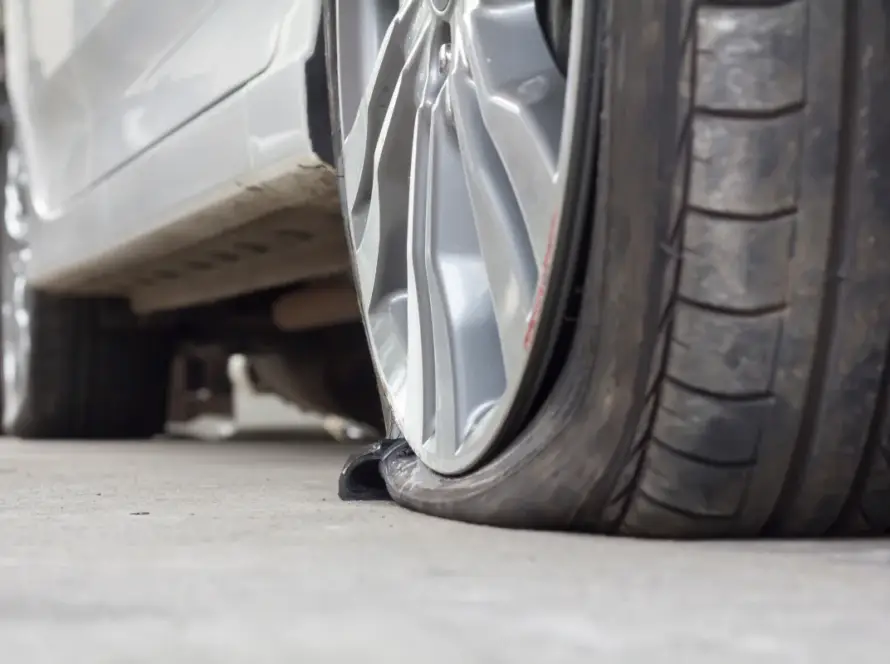
Pothole damage symptoms include the car pulling to one side, a vibrating steering wheel, an off-centre steering position, knocking over bumps, and a tyre losing pressure. Some appear within seconds of the impact. Others take days or weeks, which is why the damage is frequently missed until an MOT or a tyre change.
Check for these first:
- Pulling to one side
- Steering wheel off-centre when driving straight
- Vibration through the wheel or seat
- Knocking or clunking over bumps
- A visible bulge in the tyre sidewall
Symptoms That Appear Immediately
Pull over somewhere safe and inspect the car if you notice any of these straight after the impact.
- The car pulls left or right on a straight, level road, indicating knocked alignment or a deflating tyre
- The steering wheel sits off-centre while the car travels straight, which points to disturbed tracking
- Vibration through the steering wheel, usually meaning a buckled wheel rim
- Vibration through the seat or floor, which points to a rear wheel instead
- The TPMS warning light, indicating pressure loss
- A visible bulge on the tyre sidewall, meaning the internal structure has separated
A sidewall bulge is the one that cannot wait. The tyre can burst without warning and it is not repairable.
Symptoms That Develop Later
Impact damage often announces itself gradually, which breaks the connection in the driver’s mind between the pothole and the fault.
- Uneven tread wear, particularly on the inner or outer edge, appearing over several weeks
- Knocking or rattling over speed bumps, indicating worn or damaged suspension bushes
- The car drifting when you release the wheel briefly on a straight road
- A tyre needing topping up every week or two, from a slow leak caused by a cracked rim
- Vibration appearing only above a certain speed, typically 50mph or more
- Clunking when turning, pointing at track rod ends or ball joints
Note the date you hit the pothole. A connection you can evidence between the impact and a fault that emerges three weeks later is far stronger than a recollection.
What Actually Gets Damaged
Impact forces travel from tyre to wheel to suspension, and each stage absorbs some of the load.
- Tyres. Sidewall bulges, cuts, pinched sidewalls, and instant or slow deflation.
- Wheels. Buckled rims on steel, cracks on alloys, and bead seal failure causing a slow leak.
- Alignment. Tracking knocked out, causing pull and rapid uneven tyre wear.
- Suspension. Broken coil springs, blown shock absorbers, and damaged wishbone bushes.
- Steering. Bent track rods and damaged track rod ends.
- Underbody. Exhaust sections, the sump, and plastic undertrays on low-slung cars.
Low-profile tyres transmit more impact force to the wheel and suspension, since there is less sidewall to absorb it.
Check These at the Roadside
Carry out this inspection before driving on:
- Look at the tyre sidewall on both the inner and outer faces, running your hand around to feel for bulges
- Check the wheel rim edge for flat spots, dents, or cracks
- Look under the car for anything hanging down or fluid on the road
- Drive a short distance slowly and listen for new noises
- Check tyre pressures at the earliest opportunity
Do not continue a motorway journey with a sidewall bulge or a vibrating wheel.
Evidence to Gather Before You Leave
This is the step that decides whether a claim succeeds, and most drivers skip it.
- Photograph the pothole with something for scale, such as a shoe or a coin
- Measure its depth and width and record the figures
- Photograph the wider scene showing the location and any landmarks
- Record the exact location, ideally a what3words reference or a road name with the nearest house number
- Note the date and time
- Photograph the vehicle damage before any repair
Courts have dismissed claims specifically because the claimant could not evidence the pothole’s dimensions. Photographs taken weeks later, after the council has filled it, prove nothing.
Who to Claim From
Responsibility depends on the road.
- Local councils maintain most local roads and minor A roads
- National Highways maintains motorways and the strategic road network in England
- Transport Scotland, the Welsh Government, and DfI Northern Ireland cover trunk roads in their nations
Report the pothole through the council’s online system or the gov.uk reporting tool, which creates a dated record, then submit the damage claim separately.
The Section 58 Defence
Under Section 41 of the Highways Act 1980, highway authorities have a statutory duty to maintain publicly maintainable roads.
You must show the defect was dangerous and that it caused your damage. You do not need to prove the council knew about it. The burden then shifts to the authority.
Section 58 of the same Act gives councils a defence where they can evidence that they took such care as was reasonably required. In practice they must produce:
- Their inspection schedule for that road category
- Records of inspections actually carried out
- The defect criteria they apply
- Evidence of compliance with the highway maintenance code of practice
Most councils cite Section 58 in response to claims. The defence fails where inspection records are missing, where the road was categorised too low for its actual use, or where the pothole had been reported previously and not repaired.
Ask the authority to confirm whether it intends to rely on Section 58 and to provide its supporting evidence. A previous report of the same pothole substantially weakens that defence.
Frequently Asked Questions
How deep does a pothole need to be to claim?
No single national threshold exists. Councils apply their own intervention criteria, commonly around 40mm depth, so measure and photograph the defect rather than assuming it qualifies.
Should I claim on my insurance instead?
Claiming on insurance usually means paying your excess and losing no-claims discount. A direct claim against the authority avoids both, though it takes longer and may fail.
How long do I have to make a claim?
Vehicle damage claims should be submitted promptly while evidence is fresh. Personal injury claims carry a three-year limitation period under the Limitation Act 1980.
What if the council refuses my claim?
Request their Section 58 evidence in writing, then consider the small claims track if the inspection records appear inadequate or the defect had been reported before.
Can I claim for alignment work after a pothole?
Yes, where you can evidence the impact and the resulting fault. Obtain a written report from the garage linking the misalignment to impact damage rather than wear.