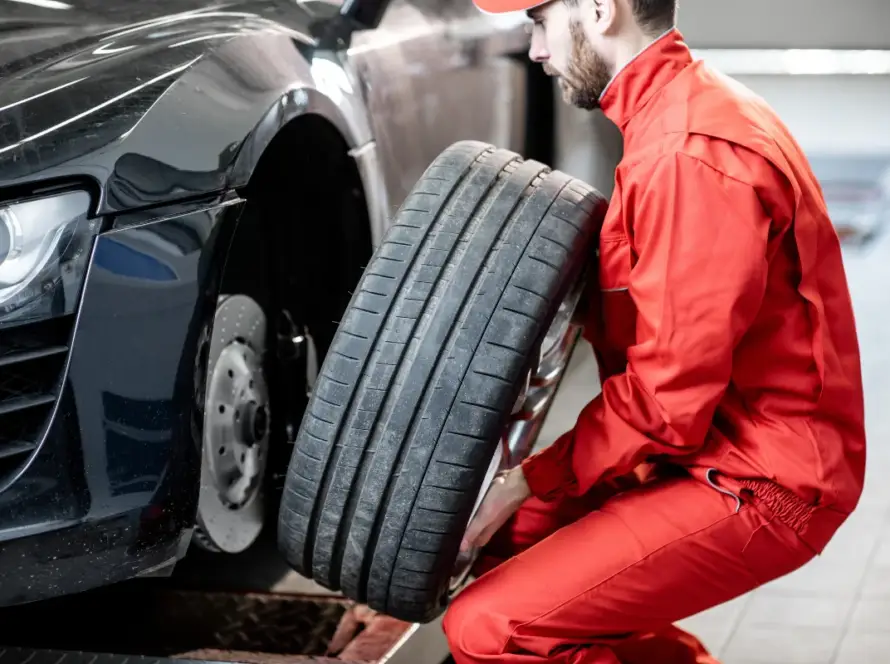
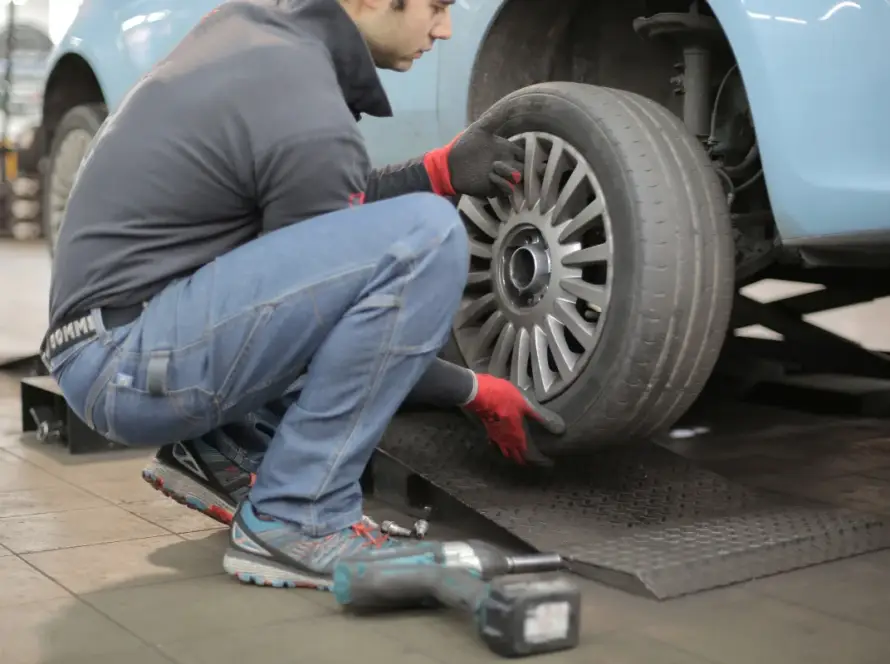
Uneven tyre wear is mainly caused by incorrect tyre pressure, bad wheel alignment, worn suspension parts, aggressive driving habits, and unbalanced or damaged wheels. Each cause creates a distinct wear pattern on your tread, so you can often spot the problem just by looking at your tyres.
Uneven tyre wear happens when different parts of a tyre tread wear down faster than others. The most common causes are wrong tyre pressure, bad wheel alignment, worn shocks and struts, and aggressive driving habits. So, if your tyres wear unevenly, something about your car or how you drive needs attention. Plus, catching it early saves you money and keeps you safer on the road.
What Does Uneven Tyre Wear Actually Look Like?
Your tyre tread – the grooved rubber that grips the road – should wear evenly across its surface. However, uneven wear creates specific patterns, and each one points to a different problem.
Center wear means the middle of the tread wears faster than the edges. Also, edge or shoulder wear means both outer sides wear down more than the center. One-sided wear affects just the inner or outer edge, while feather edge wear leaves a tread that feels smooth on one side and sharp on the other.
Cupping or scalloping – when the tread looks wavy or gouged – usually signals a suspension fault. Since each pattern tells a different story, checking your tyres regularly helps you catch problems early.
Why Does Wrong Tyre Pressure Cause Uneven Tyre Wear?
Tyre pressure – measured in PSI (pounds per square inch) – controls how much rubber touches the road. An over-inflated tyre bulges in the middle, so the center takes all the contact. Hence, the center tread wears out faster than the edges.
An under-inflated tyre, however, flattens across its width. So, the shoulders – the outer edges of the tread – carry most of the load and wear down quickly. Also, under-inflated tyres raise your blowout risk, which is a sudden and dangerous tyre burst. Check your tyre pressure at least once a month using your owner’s manual or the label inside your door frame. Plus, add pressure when you carry heavier loads, since more weight needs more support.
How Does Wheel Alignment Cause Uneven Tyre Wear?
Wheel alignment means setting your wheels to the correct angles relative to your car and the road. Since alignment controls how your tyres meet the road, bad alignment directly causes uneven wear.
Camber – the tilt of your wheel when viewed from the front – is one key angle. A wheel that tilts too far inward or outward creates one-sided wear on the inner or outer edge. Also, toe – the angle of your tyres when viewed from above – controls feathering.
If the fronts of your tyres point inward or outward too much, the tread develops a jagged, feathered edge. However, misalignment isn’t always gradual; hitting a pothole hard can knock your wheels out of line instantly. So, have your alignment checked every 6,000–12,000 miles and after any big road impact.
Can Worn Suspension Parts Cause Uneven Tyre Wear?
Yes – and this is one of the more serious causes. Your suspension system – the springs, shocks, struts, ball joints, and control arms – keeps your tyres in firm, steady contact with the road.
Worn shocks and struts – the parts that absorb road bumps – let your car bounce. Hence, the tyres lift off the road briefly as you drive, gouging out cupped or scalloped dips. Also, worn ball joints – the pivot points connecting your wheels to the suspension – shift your wheel angle and cause one-sided wear.
Worn control arm bushings – the rubber buffers between suspension parts – let the suspension drift out of place, which throws off your alignment too. Since these parts wear slowly and quietly, you may not notice until the tyre damage shows. So, ask for a full suspension inspection at every service.
How Do Your Driving Habits Wear Your Tyres Unevenly?
How you drive matters more than most people realize. Hard braking causes flat spotting – when the tyre skids and loses rubber on one concentrated patch of tread.
Fast acceleration spins the tyres aggressively against the road, also stripping rubber from specific spots. Plus, sharp turns stress the sidewall, which is the vertical section of the tyre between the tread and the rim.
Hitting potholes at speed can bruise the carcass – the internal structure of the tyre – leaving bulges or sidewall damage. Also, road debris like glass and gravel scrapes the tread unevenly. So, smooth and steady driving genuinely extends your tyre life. Since it costs nothing to change your habits, it’s the easiest fix on this list.
What Happens If You Ignore Uneven Tyre Wear?
Ignoring uneven tyre wear leads to far more than replacing tyres sooner. In the UK, the legal minimum tread depth is 1.6mm across the central three-quarters of the tyre. So, an unevenly worn tyre can drop below this limit faster, making your car illegal to drive.
Also, uneven wear cuts your grip, especially in wet or icy conditions. Hence, your stopping distance grows and your handling turns unpredictable. In severe cases, uneven wear can trigger a blowout. Plus, the alignment or suspension faults behind the wear will keep damaging other parts of your car, so your repair bills climb.
How Can You Prevent Uneven Tyre Wear?
Prevention is simpler than most drivers expect. Check your tyre pressure every month and always match it to your owner’s manual specifications.
Also, have your wheel alignment checked every 6,000–12,000 miles or after any major road impact. Get your tyres rotated – moved from front to back and side to side – every 5,000–8,000 miles, since this evens out natural wear between positions.
Plus, inspect your shocks, struts, and suspension parts at each service, since they wear slowly and silently. If you spot any uneven wear pattern, act quickly – the sooner you fix the root cause, the less damage you accumulate. Since your tyres are your only contact with the road, keeping them in good shape directly protects your safety.
Frequently Asked Questions
What is the most common cause of uneven tyre wear?
Bad wheel alignment and incorrect tyre pressure are the two most common causes. Alignment errors create one-sided or feathered wear, while pressure errors cause center or edge wear.
Can I fix uneven tyre wear myself?
You can address some root causes yourself, like adjusting tyre pressure. However, wheel alignment and suspension repairs need a qualified mechanic.
Does uneven tyre wear affect fuel economy?
Yes. Tyres that don’t meet the road evenly create more rolling resistance. So, your engine works harder and uses more fuel.
How do I know if my shocks are causing cupping?
Look for a wavy, scalloped surface across the tread. Also, your car may feel bouncy or unstable on rough roads, which points to worn shocks or struts.
How often should I check my tyres for uneven wear?
Inspect your tyres at least once a month, alongside your pressure check. Also, check them after any major pothole hit or accident.