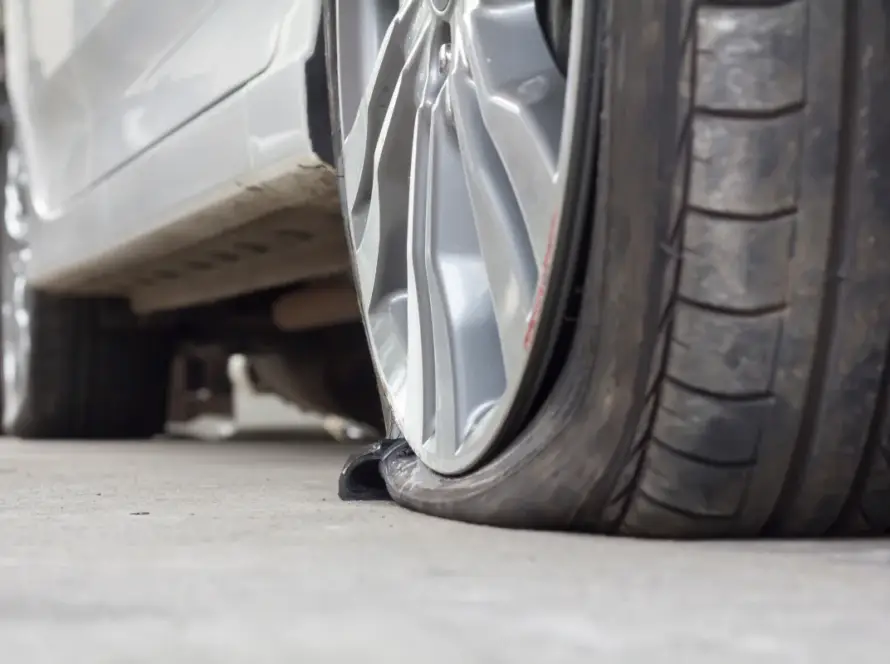
If your tyre pressure warning light is on but your tyres look fine, the cause is usually a cold-weather pressure drop, a faulty sensor, a dying sensor battery, a recent tyre rotation, or a low spare tyre. Check all tyre pressures first, then reset the light.
It’s frustrating. The warning light glows on your dashboard, yet your tyres look perfectly fine. So what gives?
In most cases, the light is reacting to something small. A drop in temperature, a tired sensor, or a recent tyre service can all trigger it. The good news is that many of these issues are easy to fix yourself.
This guide explains what the warning light means, why it switches on when your tyres seem okay, and how to turn it off safely.
What Is the TPMS and How Does It Work?
TPMS stands for Tyre Pressure Monitoring System. It’s a safety feature that warns you when one or more tyres lose air. When it spots a problem, a yellow horseshoe-shaped light with an exclamation point appears on your dashboard.
There are two types of TPMS. Knowing which one you have helps you understand the warning.
Direct TPMS uses sensors fitted inside each tyre. These sensors measure the actual air pressure and send the readings to your car wirelessly.
Indirect TPMS doesn’t measure pressure at all. Instead, it uses your car’s ABS wheel speed sensors. Since an underinflated tyre spins faster, the system assumes it’s low on air.
All new cars in the UK made after 2014 come fitted with TPMS. Plus, a faulty system can cause your car to fail its MOT.
Why Is Your Tyre Pressure Warning Light On When Tyres Are Fine?
Here are the five most common reasons the light comes on even when your tyres look healthy.
A drop in temperature
Cold weather is the number one culprit. Tyres lose roughly 1 to 2 PSI for every 10°F (about 5.5°C) drop in temperature, since cold air takes up less space.
You’ll often notice the light on a frosty morning. After about 20 minutes of driving, the air warms up and the light usually switches off on its own.
A faulty sensor
Sensors can fail or send false signals. If a sensor malfunctions, it may trigger the warning even when your pressure is spot on. A flashing light, rather than a steady one, often points to a sensor fault.
A dying sensor battery
Direct TPMS sensors run on tiny batteries that last around 5 to 10 years. As a battery fades, the sensor can play up and trigger the light. Since the battery is sealed inside, you’ll usually need to replace the whole sensor.
A recent tyre rotation or service
If you have indirect TPMS, the system must be reset after a tyre rotation or inflation. If your mechanic forgot this step, the light may stay on. Hence, a recent visit to the garage is worth remembering.
A low or faulty spare tyre
Many cars also monitor the spare tyre. So if your spare is low on air or has a faulty sensor, the warning light can switch on. People often miss this one because they forget the spare exists.
How to Reset the TPMS Warning Light
First, check the pressure in every tyre, including the spare, using a tyre gauge. Most tyres need between 30 and 35 PSI, but check your manufacturer’s recommendation to be sure.
Once your tyres are correctly inflated, try these steps:
- Drive for a bit. Driving at around 50 mph for 10 minutes can let the sensors reset on their own.
- Use the reset button. Turn the key to “on” without starting the car. Hold the TPMS reset button (often under the steering wheel) until the light blinks three times, then start the car.
- Reset via the battery. With the car off, disconnect the positive battery cable, turn the car on, and press the horn for three seconds to clear leftover power. Then reconnect the battery.
Always fix the pressure problem before resetting the light. The warning exists to keep you safe.
When Should You See a Mechanic About Your TPMS Light?
Sometimes a reset isn’t enough. Book a visit to a mechanic if the light stays on after you’ve checked and corrected all your tyre pressures.
You should also seek help if the light keeps flashing, since this often signals a sensor fault rather than low pressure. A dying sensor battery is another job for the pros, as the sensor usually needs replacing.
Got new tyres recently? A mechanic may need to resynchronize your sensors using a special tool. This is fiddly work, so it’s best left to an expert.
Keep Your Tyres in Check
A warning light with healthy-looking tyres is rarely a crisis. Usually it’s the cold, a tired sensor, or a forgotten spare.
Start by checking every tyre’s pressure, including the spare. Then try a simple reset. If the light won’t budge, a mechanic can quickly track down the cause. Either way, never ignore the light, since proper tyre pressure keeps you safer and saves you money on fuel.
Frequently Asked Questions
Can I drive with the tyre pressure warning light on?
You can drive short distances, but you shouldn’t ignore the light. Pull over when it’s safe and check your tyres. Low pressure raises your risk of a blowout and wastes fuel, so address it as soon as possible.
Why does my tyre pressure light come on in the morning and go off later?
This is almost always down to cold weather. Overnight, the temperature drops and your tyres lose a little pressure. As you drive and the air warms up, the pressure rises again and the light usually switches off.
How long do TPMS sensors last?
Direct TPMS sensors typically last 5 to 10 years, depending on the battery inside. Since the battery can’t usually be replaced on its own, the whole sensor needs swapping once it dies.
Will the tyre pressure light turn off by itself?
Sometimes, yes. If the cause is cold weather, the light often clears after about 20 minutes of driving. But if it stays on, you’ll need to check your pressures and reset the system manually.